
From Wearing Comfort to Design Proportions: What to Look for When Choosing a Bracelet Watch

For many years, metal bracelets were often treated as an afterthought while choosing a watch. Design, wearing comfort and finishing were not always given the same attention as the watch head itself. In recent years, however, major watchmakers have significantly increased their focus on bracelet design. On some new releases, such as the Rolex Land-Dweller, the bracelet has become an essential part of the watch's overall identity rather than simply a way to secure it to the wrist.
From the Audemars Piguet Royal Oak and Patek Philippe Nautilus to the Chopard Alpine Eagle, IWC Ingenieur and A. Lange & Söhne Odysseus, the quality of a bracelet's design and construction has become an important factor in determining a watch's overall value.
So what makes a great metal bracelet? What details should buyers pay attention to? The following factors often reveal the quality of a bracelet.

Link Adjustment System: Screw Fixed Links Reflect Greater Attention to Detail
One of the first things worth looking at is how the bracelet links are adjusted. Generally speaking, screw-fixed links are considered more appropriate for higher-end watches.
Compared to pin based straps, which use metal pins to remove and adjust links, screw fixed offers greater durability and a more premium feel. Pins can wear out or become loose after repeated adjustments, while screw fixed links offer long term durability and refinement.
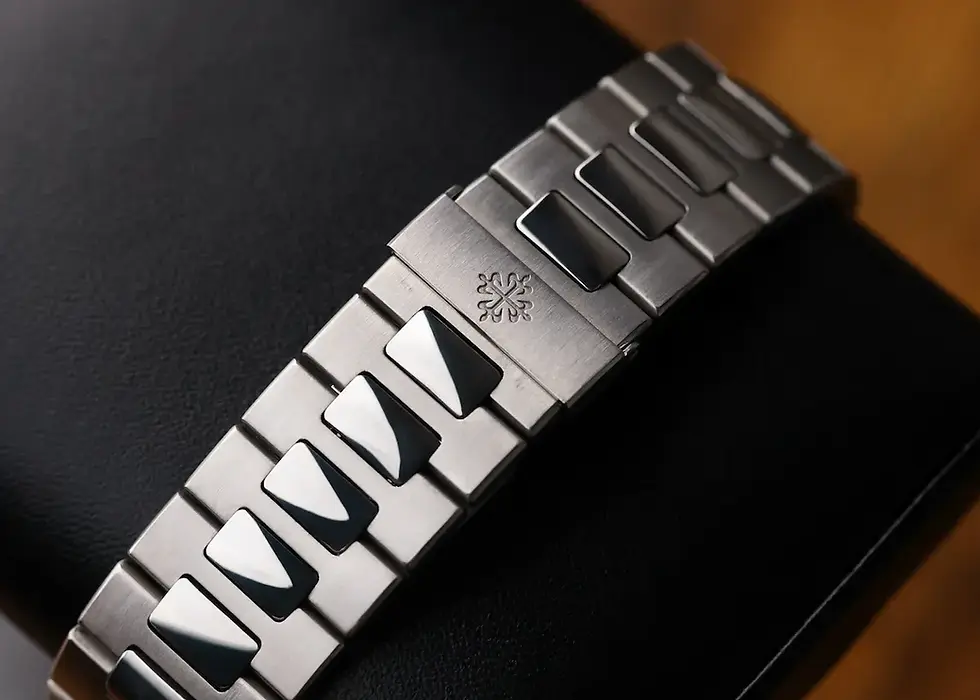
That said, this standard does not apply to all kinds of material. Titanium bracelets, for example, use a softer material. Repeated adjustments may damage the material if screws are used, which is why some brands opt for alternative solutions. Likewise, ultra thin watches may still use pin based to maintain the slim design and lightweight. The Patek Philippe Nautilus is a good example.Rather than focusing solely on whether a bracelet uses screws or pins, it is also important to understand the balance each brand has chosen between material, durability and wearing comfort.
Bracelet Weight Should Match the Watch Case
The weight of a bracelet plays a major role in overall wearing comfort.
A common issue seen in the past was a heavy watch case paired with a set of light bracelets. In many cases, this resulted from brands using a bracelet design that matches different kinds of model rather than developing one specifically for the watch. While this helps reduce production costs, it often compromises balance on the weight.
When the bracelet is too light to support the watch case properly, the watch tends to shift back and forth during wear. The center of gravity becomes concentrated in the watch head, which can negatively affect comfort and stability.

The Right Amount of Flexibility Between Links
If the bracelet bends excessively, the gaps between the links may be too large. While this can make the bracelet be flexible and felt comfortable initially, excessive movement often accelerates wear and tear over time and may eventually lead to deformation.
On the other hand, if the bracelet has almost no flexibility, it may become overly rigid. Such bracelets often feel stiff on the wrist and do not conform naturally to the wrist.
Choosing the Right Clasp: Thin for the Office, Thick for Outdoor Use
Clasp thickness is another detail that is often overlooked.A thinner clasp is generally more comfortable for office wear. It is less likely to hit the desk surface while typing, making it particularly suitable for business environments.
A thicker clasp, by contrast, offers greater strength and durability. This makes it better suited for outdoor activities, sports and situations where the watch may be exposed to higher wrist movement. When choosing a bracelet watch, it is worth considering where and how you will wear it most often. The right clasp design can make a noticeable difference to the overall wearing experience.


Comments